75% of channel partners don’t have the resources to market your products and solutions.
eTrigue Lead Accelerator helps you scale demand generation lead flow by marketing ‘Thru & With’ partners to their customers and new prospects.
Laura Ventura, Head of Global Channel Marketing, Check Point Software Technologies works with 1000+ partner worldwide and shares insights on how using eTrigue accelerates and scales Check Point’s global channel partner campaigns, and generates leads for partners with a short window to launch.
Our clients would agree.
AWS
Pure Storage
Check Point
Microsoft
Shopify
NetApp
Red Hat
You identify campaign assets and partners. eTrigue provides the platform and team to build and run your campaign. Partners focus on real-time marketing qualified leads (MQLs), setting you and them up for success.
Partner Marketing Automation Platform
Expert Content Marketing Team
Real-Time Leads and Accountability
We design, build, and scale campaigns - for one to 100+ channel partners with our platform and services.
eTrigue builds and executes your partner campaigns, typically delivering 50 leads/MQLs per quarter, per partner via real-time lead alerts with contact information and content engagement details for informed sales follow-up.
20:1 Return On Investment
Help your partners succeed and grow your revenue.
eTrigue will help you recruit partners and will handle onboarding and training. You, as the sponsor, will have full visibility to compare performance across partners and sales teams with automated management reports and dashboard. Partners focus on lead follow-up and closing deals.
35% + New Opportunities
Cross-sell, upsell and net new logos.
eTrigue develops a net new prospect list for each of your partners based on their specific targeted company sizes and industries, buyer roles, and personas ensuring MQLs delivered match partner specialties.
Join us monthly for caffeinated conversations and discover a world of valuable Channel Marketing tips.
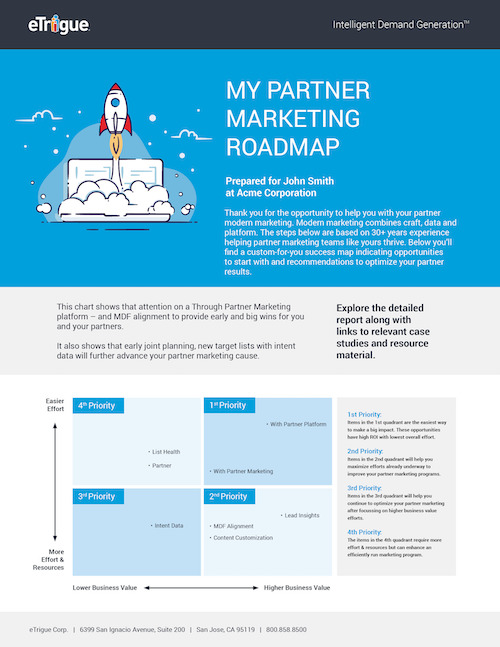
Receive your roadmap with detailed recommendations tailored specifically for your partner marketing endeavors by simply answering a few short questions.