Demand Generation Best Practices Blog


Boost Sales with Real-Time Lead Alerts

May 21st, 2013

Marketing Automation alert!The buying process has changed forever. Sales no longer controls the early stages – buyers do. Your website is the front door to your company: buyers visit and research before you even know who they are. In fact, 85% of B2B buyers research their options on the web. Wouldn’t it be great to engage with these buyers during the research phase, when your company is top of mind? That’s exactly what real-time lead alerts enable you to do.

Lead alerts are basically a caller ID for your website. They let you know who’s on your website and what they’re doing, and since these alerts are accessible anywhere, anytime, they enable a successful sales call. Lead alerts are instant, so you know you’ll get the lead in real time while they’re still actively engaged with your company. The combination of getting to that lead fast and getting to them with valuable information can change a sales call from an annoying cold call to a much-appreciated, timely and relevant call that provide just the additional info the lead needs. No more cold calls!

A lead alert includes valuable information, including the web pages the lead has visited, how much time they spent on each page, and also their history – not just information on this particular visit, but lifetime history of visits and actions. In other words, real-time lead alerts provide you with timeliness – because the lead is still engaged; and with relevance – because you know who they are and what they’re interested in. As a result, the sales person can have an intelligent call with that person.

Lead alerts start with anonymous visitor tracking. All visits to your website are tracked as anonymous leads. Ultimately the goal is to get that person to reveal who they are, typically by filling out a form or clicking a link in an email. Now the system flows the rich anonymous history into their name and email address. With today’s buying behavior and the intensive anonymous research many B2B buyers are doing on websites, once the lead reveals who they are, they could very well be a qualified lead, which makes timely interaction all the more important.

At this point, thanks to the detailed lead alert, you’ll be calling a lead on whom you have very rich information, and instead of a timid sales call, your sales person will be confident that they can have an intelligent conversation with that lead, quickly focusing on what the lead is interested in. A personal call is always better than a generic call.

What if the noise level gets too high? Obviously, sending real-time alerts to sales can become too noisy and disruptive. One way to handle this is to tailor lead alerts according to specific parameters. For example, only trigger lead alerts after a certain lead has looked at a specified number of web pages, or has spent a specified amount of time on your website. Another option is to create rules and send the real-time alerts into a special folder, to be checked a few times per day. There’s also the option of choosing daily alerts instead of real-time alerts.

However, keep in mind that the biggest benefit of real-time lead alerts is your ability to strike while the iron is hot. A study by the MIT Sloan School of Management showed that the odds of connecting with a prospect are ten times greater if you call within a half-hour of their web visit. And if you make the call and get that connection, you’re far more likely to also qualify that particular customer.

Surprisingly, only 25% of companies surveyed provide their sales teams with real-time alerts. That’s a huge missed opportunity. Lead alerts are one of the key benefits of marketing automation. When looking at best-in-class companies who use marketing automation and have activated lead alerts, we see:
- 2X revenue growth compared with competitors who did not automate
- A significant drop in cost per lead
- Almost twice the close rates
- Significantly higher lead conversion rates
- Shorter sales cycles

Real-time lead alerts can provide a distinct competitive edge to sales and marketing teams, and significantly boost your engagement, conversion and revenue. If you could increase sale performance by ten times, wouldn’t you want to do it?

How to be an Awesome Marketer

May 14th, 2013

Marketing AutomationAnyone who’s ever served in any marketing capacity is painfully aware of how marketing is perceived in many organizations across the country. The CFO might view “marketing budget” as a dark, bottomless pit. Sales reps often accuse marketing folks of being clueless and completely unhelpful, sending them low-quality leads. Traditionally, marketing has often been viewed as a necessary evil, something an organization has to put up with, even though it’s difficult to justify.

But things are changing, and marketers today, at the age of quality content, exact metrics and elaborate reporting, can finally be proud of what they do. Here are a few ways you can be that awesome marketer that people inside and outside the organization respect.

1. Respect the customer. This is true in every market, and especially in the B2B space. Your customers are smart. They are internet-savvy, well-researched, and by the time they show up on your website (by registering to download a demo, for example), rest assured they already have a fairly intimate knowledge of your company and your products. Don’t insult them by trying to spoon-feed them the basic stuff. Use your marketing automation software to find out who they are, what they’ve been doing up until now on your website, and what exactly they need – then address those specific needs.

2. Respect the sales organization. Of course you’re aware of the need to work closely with Sales to determine correct messaging and what constitutes a quality lead. We’re all aware of the importance of marketing-sales alignment. But to be a truly awesome marketer, one that’s respected by Sales, you need to respect sales too. Sales reps, certainly the best ones in your organizations, know a lot. They have intimate knowledge of your customers and their needs, of what works and what doesn’t. Rather than ignoring this knowledge or fight it, listen to it. Working together will serve both your interests as it will culminate in more sales, and now that we are able to measure marketing campaigns’ impact on sales, you will be the hero too.

3. Be useful. Content marketing is important of course, but in the era of the internet, not any content will do. The content you churn out must be extremely useful. It needs to be the kind of content that people enjoy reading – the kind of material that they would want to share. Never worry about giving content for free. Quality content will attract business, generate repeat business, will establish you as a thought-leader, and will very likely translate into better sales numbers.

4. Be social. Are you using social media? I hope you do, because everyone else is, including your customers, your prospective customers, influencers in your space and your competitors. You needs to identify the social media channels most appropriate for your space (Twitter and LinkedIn work great for most B2B companies, while Facebook, Pinterest and Instagram are quite suitable for consumer-facing organizations); then, make sure you’re being truly social. Resist the temptation to only churn out content – this is fine of course, but you should also be listening to others, and responding to them. Social media is about having conversations, not about shouting out your messages to whomever might be listening, and those conversations can actually teach you quite a bit about your space and especially your prospects and their needs.

5. Be accountable. I could be biased, but I happen to think that marketing automation is one of the best things that ever happened to marketers, not just because it’s made our lives easier, but mainly because it finally gave us the tools to measure campaigns and become accountable. Traditionally a bottomless pit, the marketing organization can now defend itself and its budget by drawing a fairly clear line between marketing campaigns and their results. In addition, measuring helps you fine-tune your efforts, weed out the failing campaigns and focus on successful ones.

6. Be efficient. Never do manually something that you can automate. Some tasks are just too error-prone when done manually, and managing a complex marketing campaign is certainly one of them. You have marketing automation software, right? Then use it. And if it’s too complex to use, consider investing in a simple, straightforward, affordable marketing automation system that you’ll actually end up using.

Want to be an awesome marketer? I have five words for you: respect, usefulness, sociability, accountability and efficiency. Oh, and two more that can link all of these together and make your life much, much easier: marketing automation.

Increase Sales Productivity with Marketing Automation

April 29th, 2013

marketing automationI’m sure you’ll agree that increasing sales productivity translates into increasing revenue.

No doubt, you’ll also agree that sales reps should not be calling bad numbers (the result of poor data), bad leads (the result of poor qualifying by marketing) or leads that might be valuable sometime in the future, but for now are still quite cold.

Certainly, sales reps should NOT be spending their time on demand generation activities.

Interestingly, although everyone pretty much agrees on the above statements, a recent survey shows that almost 70% of the companies surveyed still struggle with lead generation, with sales executives reporting that the leads they get are just not good enough, and with sales reps taking on more and more demand generation responsibilities and performing them independently.

As I was reading through the survey findings, I was amazed that these issues can still persist, even in the era of marketing automation. After all, marketing automation is one of the best tools for keeping a clean marketing database. As I said before, several of the tools needed to manage your marketing database are built into marketing automation: removing duplicates; moving from titles to job functions when segmenting; dynamic progressive forms as a tool to append more information to the organic list; CRM integration; tracking opt-outs; and email deliverability status.

Marketing automation is also the perfect tool for dealing with another major concern mentioned in the survey – prioritizing leads, and sending only the sales-ready ones to sales. This is no doubt a difficult task to perform manually, but with marketing automation, tools such as lead scoring enable you to qualify prospects based on their engagement with your company, demographic profile, and timing, giving you the ability to independently score each dimension to provide a clearer picture of how a prospect fits your profile of a sales-ready lead. Once armed with this knowledge, you can make sure that only the truly sales-ready leads are handed to sales.

This tells me that many companies either haven’t yet adopted marketing automation, or they have adopted it but are yet to fully utilize its many benefits. I suspect that the latter group might have purchased expensive software that’s difficult to implement and operate and requires dedicated staff to maintain. These systems often end up shelved rather than used. Perhaps a look at the ease of use and simplicity of eTrigue is in order.

Want Better Marketing/Sales Alignment? Use Marketing Automation

April 16th, 2013

alignmentBack in 2010, I wrote a post on how marketing automation can help promote that elusive marketing/sales alignment that we’re all trying so desperately to acheive.

Now, thanks to Forrester, we have the research to support my theory (although that theory was based on lots of anecdotal evidence!) In a recent article, Lori Wizdo says, “In our study, we found that companies who have implemented a marketing automation solution reported significantly higher levels of collaboration between sales and marketing, across a number of different dimensions.”

As Ms. Wizdo explains, implementing marketing automation software means that the company has a managed process in place for lead generation, lead nurturing, and defining lead readiness, in addition to providing sales with lead alerts.

One of the major areas where marketing automation helps avoid arguments is defining and executing field programs. As Ms. Wizdo points out, this is an obvious advantage of marketing automation. The ability to measure the ROI on any given program means that there’s no need to argue about what works and what doesn’t – marketing automation gives us the numbers, which makes it easy for both marketing and sales to identify the programs that should be kept alive vs. those that need to be killed.

Automation also helps us to get to know our leads better by capturing insight into their behavior. When we better understand our prospects, we as marketers can have better communication with them, tailored to their specific needs and sensitive to their responses. We can also better identify their sales readiness, and when we do transfer them to sales, sales can have better conversations with them and close deals faster.

Obviously, the very task of managing leads becomes much more streamlined when automated, and I would like to add here that apart from the obvious advantages of automating a big database over trying to manage it manually via Excel (which can lead to some serious marketing mistakes), again we see here a better opportunity for marketing and sales to collaborate when defining the criteria for lead scoring, and creating sales messaging that comes from sales but is in line with marketing’s general messaging.

The very fact that marketing automation creates a managed lead-to-revenue process helps with collaboration. In addition, built-in marketing automation tools such as lead scoring and lead nurturing help smooth the process out by providing marketing and sales with an incentive and an opportunity to agree on basic definitions prior to launching campaigns, and by measuring results to see what actually works.

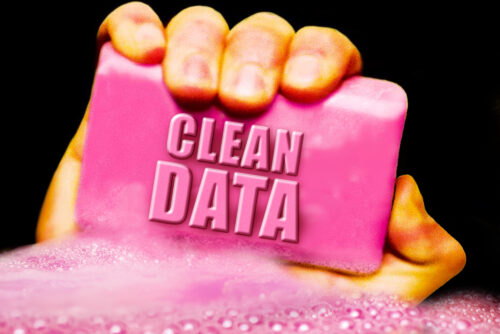
Want Better ROI? Clean Up Your Marketing Database

March 19th, 2013

marketing automationIt’s not rocket science and really, it makes perfect sense – poor marketing records lead to less-than-successful email campaigns, and to fewer resulting inquiries.

But in the B2B space, where records become outdated quickly as people change titles and jobs, and where people often give false information intentionally to avoid a sales follow-up, keeping a clean marketing database seems like a daunting – not to say impossible – task.

It’s a task worth undertaking however, especially if you use marketing automation technology and want to make the most out of it. After all, one of the biggest advantages that marketing automation offers is segmenting your database, thus enabling you to better tailor your communications according to parameters such as title and industry. Needless to say, this will work much better if the database actually reflects the reality. But how do you go about it? We’ve compiled a list of nine easy steps for cleaning up your marketing database.

Nine steps for cleaning up your marketing database:

1. Align your marketing database with your marketing goals. Who do you want to target? Who do you NOT want to target? Don’t go too wide (“Everybody is my customer!” can really backfire), but don’t define your market too narrowly either – obviously, this would result in missed opportunities.

2. Find the right balance of decision makers to influencers. Typically, you want to have more decision makers and fewer influencers in your marketing database. A 5:1 ratio usually works well.

3. Remove duplicate records. Most CRM systems can identify duplicate email addresses, but they won’t necessarily flag a common B2B situation where the same person appears with several different email addresses. This can result in the same person receiving the same communication from you more than once, which will obviously be annoying to her and might cause her to opt out. To remove these duplicates, sort your database by name, not just by email address.

4. Deal with database erosion. Natural and unavoidable workplace dynamics such as job changes, title changes and relocations mean that in just one year, over a third of your marketing database can become outdated. This means you need to regularly refresh your database – every quarter is a good idea. Use email pinging services to identify email addresses that are no longer valid.

5. Acquiring databases. It’s best to acquire rather than rent. Optimize the scope of the email database, making sure that it covers the markets and industries you’re interested in. You should also optimize the depth – the list you acquire should give you access to as many decision makers as possible. To get an optimized list, you’ll likely need to acquire several different databases.

6. Append data to your organic leads. Your web forms probably ask very little of visitors in terms of identifying information, to avoid scaring them off. This means that your organic data, collected on your website, is incomplete, which makes segmenting difficult. The best way to deal with this issue is to append data from other sources to your organic leads.

7. Minimizing opt-outs. Opt-outs are bad, and the best way to avoid them is to send relevant messaging, enabled by segmenting. So, for example, you would want to send your influencers a general message, but the decision makers should receive a more specific message. We already know that you need 7 touches with prospects to get them engaged, but send them at a frequency that does not become a turnoff. Always monitor the response to each of your messages to ensure that you do not become annoying.

8. Sort your database titles. Once you’ve acquired a database, identify the titles you’re interested in by applying a positive search algorithm (“Assistant Vice President”) and filter out the titles you’re not interested in with a negative algorithm (“assistant to the Vice President”).

9. Build custom sales databases. Field Sales may approach you with a list of companies they would love to do business with, asking you to populate the list with names, email addresses etc. It may seem impossible, but in fact, with automation, you can populate 30-40% of such a list. With a combination of on-shore automation and off-shore manual lookup, you can even get to an exciting 80% population.

Keep in mind that several of the tools needed to manage your marketing database are built into marketing automation: removing duplicates; moving from titles to job functions when segmenting; dynamic progressive forms as a tool to append more information to the organic list; CRM integration (make sure it removes duplicates); tracking opt-outs; and email deliverability status.

Marketing Automation, From the Comfort of Your Own Mobile Device

February 27th, 2013

old_carAre you as tired as I am of hearing that “mobile is the future?” You probably are, but – let’s face it – mobile IS the future. As more and more of us favor our smart phones and tablets over desktop computers and laptops; as we perform more and more work tasks and leisure pursuits from anywhere, it’s becoming obvious that it’s not enough to offer a great product – any product aiming to be great needs to work on mobile devices too.

“Mobile is the trend considered most likely to fundamentally shape marketing in the coming years,” points out Dorie Clark over at Forbes, and I agree. That’s why we’ve added mobile support to our DemandCenter® marketing automation system. The application now supports mobile operation and management with Apple iOS and Android mobile devices, which means that eTrigue users now have on-the-go smart phone or tablet access to their marketing campaigns.

We wanted to give you mobile marketing automation, but as we were brainstorming how to go about doing that, we realized that the last thing you needed was to have to download, install and learn a separate mobile application. So unlike other marketing automation applications, that require a separate mobile client, eTrigue’s capability is baked directly into the core system.

Whether using eTrigue DemandCenter marketing automation on your desktop or on your mobile device, you will enjoy the same intuitiveness, ease-of-use and user friendliness that our application is known for. Simple drag-and-drop functionality allows you to build and manage campaigns on-the-go, create and modify landing pages and email messages, monitor campaigns in real-time and view performance reports. Sales professionals can receive real-time lead alerts straight to their mobile phones, and access details on their prospects.

Most of us have bee performing a growing portion of our work tasks from our mobile devices (Frank Gillett shares some interesting stats on that over at Forrester). No one is glued to their desk and/or their PC for 8 hours each day anymore. We move around, and we like to stay on top of things and get things done even when we’re away from our desks.

Is mobile the future? Probably. But here at eTrigue, we actually believe that mobile is also the present, and that what seems now as cutting edge and advanced will be the norm in just a few short years. That’s why we’re happy to announce that mobile access will be available to all eTrigue users in just a few weeks, during the first calendar quarter of 2013.

Technology’s Role in Marketing is a Supporting Role

February 20th, 2013

Marketing AutomationNo doubt you want to run a better, more efficient marketing operation. We all do. So you go ahead and invest in technology – automation should do the trick, right? Ah! Now you can sit back, relax, and allow the technology to do the work for you. After all, that’s what technology and automation are all about, right? Do the stuff we don’t want to do or lack the time to do.

Well, actually, wrong. Certainly technology and automation, including marketing automation, are here to streamline things, make our lives easier, and help us avoid performing repetitive, error-prone tasks that’s let’s face it, computers are just better at than the human brain.

But the human brain still needs to lay the foundation, create the blueprint, make the rules that the software can then follow. You just can’t expect marketing automation to run your marketing. It can help you immensely in efficiently running your marketing programs, but its role is a supporting role, and this is important to remember before you invest in the software.

I’m not telling you not to invest in marketing automation, of course. That would be silly of me, as I make and sell marketing automation and can personally attest to its incredible usefulness in improving marketing performance. But I want you to be happy with my product, and to be happy, you need to know exactly what the product can – and cannot – do for you.

I wholeheartedly agree with Carlos Hidalgo, who recently said that marketing organizations that want to have an impact on the business should focus on developing their process – they need to create a demand strategy and process that manages the buyer relationship through the entire life cycle. Hidalgo emphasizes, and I agree, that this is not accomplished by implementing technologies. This needs to be done by humans.

Once you have a process in place, marketing automation helps you run it smoothly and maximize its efficiency and impact. With marketing automation, you can expect to launch more marketing campaigns and generate more qualified leads, achieving a high, measurable marketing ROI and a very real revenue impact.

But the first step towards a strong, efficient marketing organization is creating and implementing a strategy and a process – not buying the supporting technology and expecting it to do it all.